Bee products : Honey
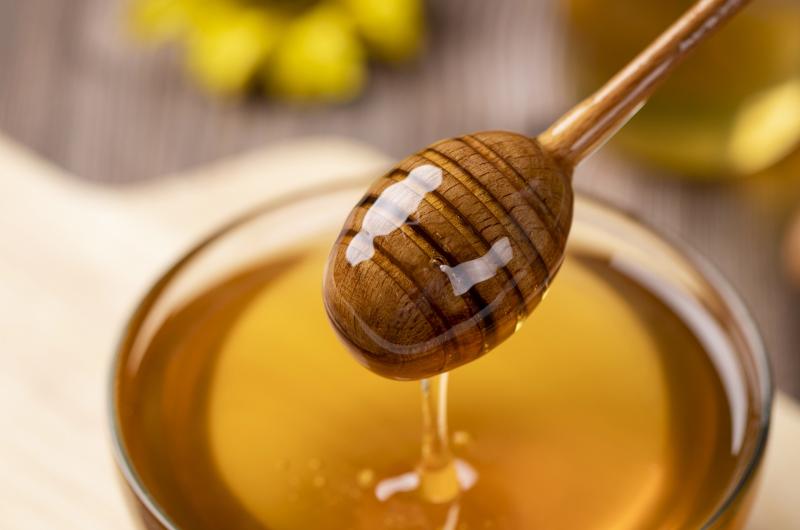
If a product says to be associated with bees, it is naturally honey. Honey is made from the nectar collected by worker bees from different flowers. If the nectar is essentially made up of water and sugars, each plant produces a specific nectar whose attractiveness depends on its composition and its abundance.
Once at the hive, worker bees will circulate the nectar between their mouth and their crop (stomach) several times before passing it to other workers who will repeat the operation.
After being mixed with the saliva of many bees, the nectar is transformed into honey. This will be stored in the cells constituting the combs of the hive.
100 grams of honey requires the visit of approximately 1,000,000 flowers and a teaspoon of honey is the lifelong work of 50 bees. It is needed to feed the larvae and serves as food in winter.
It is not recommended to give honey (regardless of its origin) to a child under one year old because of the risk of infant botulism.